
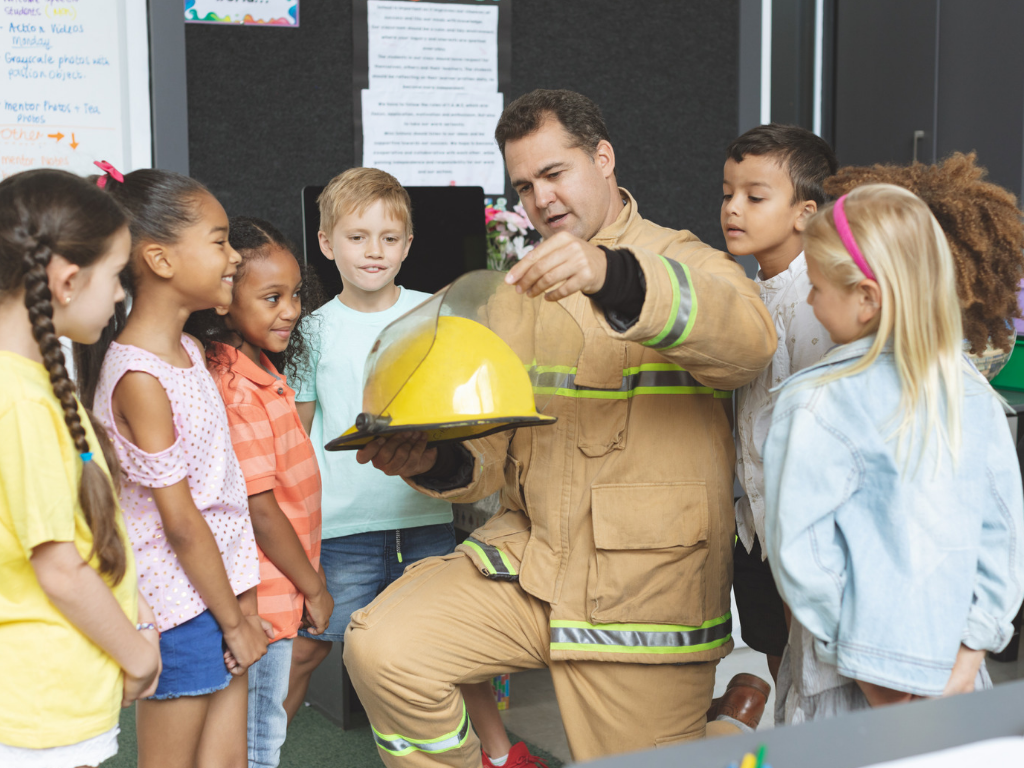

When we think about teaching fire safety, we often jump straight into smoke alarms, escape plans, and “Stop, Drop, and Roll.” While these are all incredibly important, I realized there are several life skills children should learn first.
Imagine a child needs to call 911. They know something is wrong—but do they know their address? Can they tell the dispatcher where they are? Do they know a parent’s phone number if they become separated from their family?
That’s why I decided to build our emergency preparedness lessons from the ground up.
Instead of starting with fire drills, we begin with the basic skills every child should know before an emergency ever happens.
Step 1: Learn Important Personal Information

One of the first safety skills children should master is knowing important information about themselves.
Young children should practice learning:
- Their full name.
- Their parents’ names.
- Their home address.
- A parent’s phone number.
- Their city or town.
Knowing this information can help if they become lost, need to contact a trusted adult, or have to speak with emergency responders.
Activities We Use:
- Practice memorizing a parent’s phone number. (Free printable here)
- Learn how to unlock a trusted adult’s phone in an emergency (only with permission and family guidance).
- Locate your home on a map (activity video here) 🇨🇦 Printable 🇺🇸 Printable
- Practice writing your address (printable for 🇨🇦 here & printable for 🇺🇸 here)
- Mail a letter to learn how addresses are used in real life. (video here of us doing just this!)
Step 2: What Is an Emergency?

Not every problem is an emergency.
Children benefit from learning the difference between situations that require help from a trusted adult and situations that require calling 911.
Examples of emergencies include:
- A fire.
- Someone who is badly hurt.
- A person who won’t wake up.
- Someone having trouble breathing.
- A serious car accident.
- Seeing a crime happening.
- Intruder
Examples of situations that are not emergencies include:
- Losing a toy.
- A scraped knee.
- Wanting help with homework
- A lost pet
- Flat tire on the bike.
- Fight with a sibling.
Activities
- Cut-and-paste sorting activity: Emergency or Not? (Coming soon!)
- Discuss different scenarios together.
Step 3: How to Call 911

Once children understand what an emergency is, they can begin practicing how to call for help.
Explain that 911 should only be called during a real emergency.
Practice what to say:
- My name is ________.
- I need help.
- My address is ________.
- There is a fire. (Or explain the emergency.)
- I am ____ years old.
Remind children to stay on the phone and answer the dispatcher’s questions until told it is okay to hang up.
Activities
- Pretend phone role-play. (DiY sensory phone)
- 911 conversation worksheet (coming soon)
- Practice emergency scenarios.
Step 4: Fire Prevention Comes First
Before children learn what to do during a fire, they should understand how fires can start.
Many fires can be prevented by knowing which items are dangerous and should never be touched without an adult.
Talk about items such as:
- Matches.
- Lighters.
- Candles.
- Stoves and ovens.
- Fireplaces.
- Space heaters.
- Irons.
- Hot pots and pans
A simple family rule is:
If it’s hot, can make heat, or can start a fire, don’t touch it without an adult.
Activities
- Fire hazard dot marker page (coming soon)
- Fire safety maze
- Discuss safe versus unsafe household items.
Step 5: What to Do During a Fire

Once children understand fire prevention, they are ready to learn what to do if a fire happens.
Practice these steps:
- Stay calm.
- Get out quickly.
- Leave everything behind.
- Stay low if there is smoke.
- Go to your family’s meeting place.
- Never go back inside.
- Call 911 from a safe location with an adult if possible.
Children should also know that firefighters wear special equipment that may look scary, but they are there to help.
Activites
- Fire safety maze.
- Cut-and-paste sequencing activity. (Coming soon)
- Fire safety rules poster. (Here)
Step 6: Create a Family Escape Plan

Every family should have a fire escape plan.
Walk through your home together and identify:
- Two ways out of each room when possible.
- Where smoke alarms are located.
- A safe meeting place outside.
- Who to call after everyone is safe.
Practice your family’s fire drill at least twice each year so everyone knows exactly what to do.
Activites
Complete a printable family escape plan together and practice it as a family.
Why We Teach Emergency Preparedness This Way

Children remember best when new skills build on previous ones.
Instead of simply memorizing fire safety rules, they first learn:
- Who they are.
- Where they live.
- How to contact a trusted adult.
- What an emergency is.
- When to call 911.
- How to talk to emergency responders.
Only then do they move into fire prevention and fire safety.
This creates a strong foundation that prepares children not only for fire emergencies but for many unexpected situations they may face throughout childhood.
Emergency preparedness doesn’t have to be scary. Through hands-on activities, role-playing, and simple conversations, children can build confidence while learning skills that could one day make a real difference
Fine & Gross Motor Activities


Young children learn best through hands-on experiences. While worksheets help reinforce important concepts, active play gives children opportunities to strengthen the physical skills they’ll use every day.
Skills children practice:
- Fine motor strength
- Hand-eye coordination
- Pincer grasp
- Bilateral coordination (using both hands together)
- Problem-solving
- Patience and perseverance
- Sensory exploration
In this activity, children build houses with LEGO DUPLO blocks before covering them with “flames” made from colored shaving cream. Using water guns, they work to spray out the fire and rescue the homes.
This activity naturally opens conversations about fire prevention, firefighters, and staying calm during emergencies while developing physical skills.
Skills children practice:
- Gross motor coordination.
- Hand and arm strength
- Shoulder stability
- Hand-eye coordination
- Aim and control
- Cause-and-effect thinking
- Creative problem-solving
- Cooperative play and teamwork
Play-based learning helps safety lessons become memorable. Instead of simply hearing about emergencies, children actively engage with the concepts through meaningful, age-appropriate activities that strengthen both their minds and bodies.
Books to Read
Click on Images for link


Teaching emergency preparedness doesn’t have to be overwhelming or frightening. By introducing one skill at a time—learning a phone number, recognizing an emergency, practicing a 911 call, understanding fire hazards, and creating a family escape plan—you can help your child build confidence through hands-on learning and real-life practice.
The goal isn’t to make children fearful; it’s to help them feel prepared if they ever need these important fire safety and life skills .
Other Blog Posts To Check Out
Easy Outdoor Activities for Kids You’ll Want to Save for Summer
How To Make A Secret Message Card — Easy Valentine’s (or Encouragement) Craft
How to Have a Stress Free Christmas : 15 Peaceful Tips for Moms
How to Teach Kids Money Value ( Canadian Coins & Hands-On Activities
11 Easy DIY Homeschool Resources You Can Make at Home
Fizzing Pumpkins: A Fall STEM Activity Kids Will Love
Easy DIY Pumpkin Slime Recipe: A Fall Favorite For Kids
Little wings, Big Learning! A Preschool-Kindergarten Butterfly Study Unit
Space Unit Study: The Ultimate Collection of 70+ Hands-On Activities